
Why Quit? The Longevity Perspective
This isn’t about shame. It’s about getting your life back.
Most people already know smoking is harmful.
The more useful question is: what changes when you stop?
From a longevity point of view, quitting smoking is one of the most powerful health decisions a person can make. It can reduce the risk of premature death, lower the risk of major disease, and improve the number of years you are able to live actively and independently.
Recovery starts sooner than most people think
Smoking damages the body gradually. The recovery process is gradual too, but it begins quickly.
Within minutes and hours, your cardiovascular system begins to respond. Over the following weeks and months, circulation and lung function can improve. Over the following years, the risks of heart disease, stroke, and some cancers continue to fall.
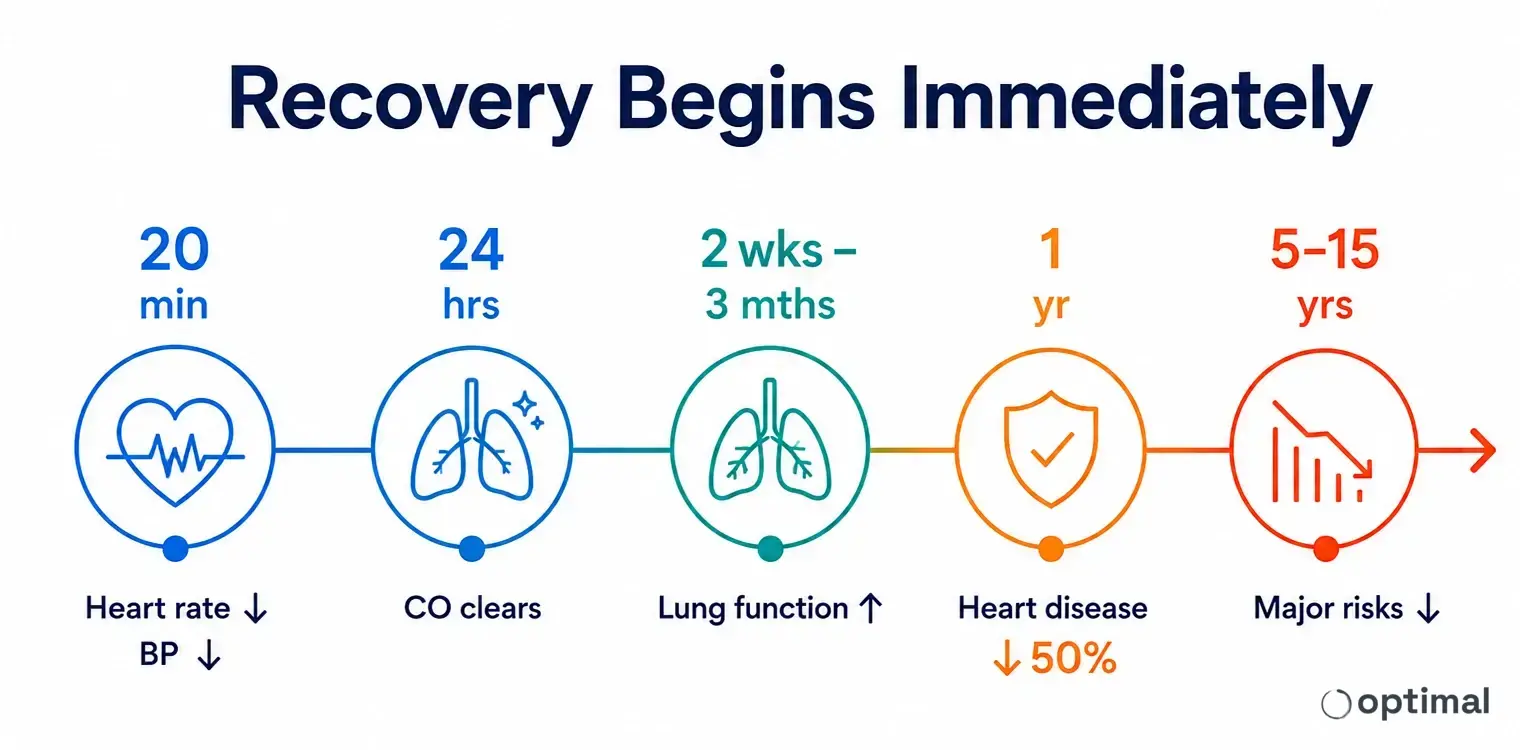
That matters because many people imagine quitting as a long period of discomfort before any benefit appears. In reality, the body begins moving in the right direction almost immediately.
It is still worth quitting later in life
Some smokers worry that the damage has already been done. That is understandable, but the evidence is more encouraging.
Quitting earlier gives the greatest benefit, but quitting at any age can improve health and reduce risk. Even people who already have smoking-related disease can benefit from stopping.
What are you getting back?
People often think about quitting in terms of what they are giving up.
But the better question is what they are getting back.
Some changes are noticeable quickly. Others accumulate over months and years.
- Easier breathing
- Less coughing and wheezing
- Better exercise capacity
- Improved taste and smell
- More energy
- Lower long-term disease risk
Quitting is not simply about living longer. It is about improving the years you are living now.
Quitting is not a single heroic moment. It is a decision that keeps paying you back.
Use support, not just willpower
Nicotine dependence is real. Quitting can be difficult, and needing support is not a weakness.
Evidence-based support can improve your chances. That may include counselling, Quitline support, prescribed medicines, or Nicotine Replacement Therapy (NRT).
A structured quit attempt is usually stronger than simply hoping motivation will hold.
Sources
- World Health Organization: Health benefits of smoking cessation
- Centers for Disease Control and Prevention: Benefits of quitting smoking
- Australian Government Department of Health: Benefits of quitting smoking
- Better Health Channel: What to expect when you quit smoking
- Quit: Health benefits of quitting smoking
Your Next Step
You do not have to solve the whole problem today. Start by choosing your next practical step: learn about Nicotine Replacement Therapy, set a quit date, or talk to a health professional.
The important thing is to begin. Recovery starts sooner than most people think.
Part of the optimal health library
Start your quit smoking journey
Create a free account to start your quit smoking journey.
Create a free account to start your quit smoking journey